
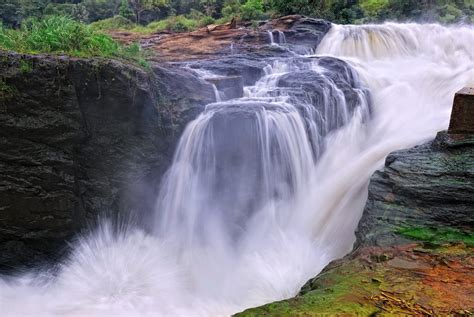
Few places on Earth demonstrate the raw force of nature like Murchison Falls, the roaring heart of Uganda’s oldest and largest national park. Here, the mighty Nile—the world’s longest river—compresses through a narrow 7-meter gorge before exploding into a thunderous 43-meter drop. The pressure is so extreme that locals call it “the place where water breaks thunder.” This is not just a waterfall. It is a geological spectacle, a wildlife magnet, a safari paradise, and a historical landmark shaped by explorers, kings, war, and conservation heroes.
Travelers who reach this corner of northwestern Uganda often describe the experience as humbling—nature at full volume, heat shimmering over savannah plains, crocodiles sunning on the riverbanks, and a plume of mist rising like smoke from a cauldron of churning water. Murchison Falls is not only the strongest waterfall on Earth. It is the beating pulse of a national heritage, and for many visitors, an African safari highlight that lingers long after the journey ends.
Where Strength Meets Beauty — The Power of the Nile
To understand why Murchison Falls is considered Earth’s strongest waterfall, you must stand at the top viewpoint. Here, the Nile narrows from a river hundreds of meters wide down to a crack in the rock—only seven meters across. Millions of liters of water surge through this bottleneck every second. The speed, friction, and pressure create a violent jet of white foam that detonates below with a thunderous sound that echoes across the cliffs.
Unlike Victoria Falls (massive and wide) or Niagara Falls (horseshoe-shaped and controlled by dams), Murchison is a weapon of pressure—raw, concentrated power. The Nile is literally forced to explode. It’s physics, chaos, and beauty fused into one.
“Harnessed power” doesn’t describe Murchison—here, water is unleashed.
A Park Built by the River
Murchison Falls National Park stretches across 3,893 square kilometers, making it Uganda’s biggest conservation area. The Nile splits the park into northern savannah plains and southern forest habitats, creating one of the most diverse wildlife ecosystems in East Africa.
From the riverbanks to the delta, travellers encounter landscapes so varied that each kilometer feels like a new world. The falls are the centerpiece—the natural engine that keeps the ecosystem alive.
A Brief History — Explorers, Wars, and Conservation
The fame of Murchison Falls goes back to the mid-1800s. British explorers Sir Samuel Baker and Florence Baker were among the first Europeans to document the falls in 1864 and named them after Roderick Murchison, president of the Royal Geographical Society.
But history here is not only romantic exploration. In the 1960s and 70s, political instability and poaching devastated wildlife populations. Idi Amin’s regime nearly erased the park’s elephants and rhinos. The region suffered conflict, but today, Murchison is a story of revival.
The Uganda Wildlife Authority, together with conservation groups and local communities, re-established law enforcement, anti-poaching patrols, and ecological research. Wildlife rebounded. elephants returned. Lions multiplied. Nile crocodiles flourished. Murchison stands today as a living symbol of restoration and resilience.
The Wildlife Experience — Big Game, Big Drama
Travelers visit Murchison Falls for more than water. The safari experience rivals Kenya and Tanzania—without the crowds.
On game drives across the northern plains, you may encounter:
- Elephants
- Cape buffalo
- Jackson’s hartebeest
- Oribi
- Warthogs
- Rothschild giraffes
- Hippos
- Hyenas and leopards
- Lions—including tree-climbing behavior in some regions
- Over 450 bird species
Birdwatchers consider Murchison sacred ground. The shoebill stork, one of Africa’s rarest birds, lurks in the Nile delta marshes. Giant kingfishers dive from papyrus reeds. African fish eagles scream across the sky.
If mammals are the drama, birds are the poetry.
Boat Safari — The Ultimate River Journey
Nothing prepares you for the boat cruise to the base of the falls.
This is where safari becomes cinematic. Boats depart from Paraa and glide upriver, surrounded by hippos in the water, elephants drinking along the banks, and crocodiles whose jaws can crack a buffalo femur.
The cruise slows near Devil’s Cauldron, that swirling froth beneath the waterfall’s choke point. The roar grows louder, the spray cools your skin, and the boat feels tiny compared to the power above.
Some travelers continue the adventure by hiking to the top of the falls, tracing a narrow trail used by explorers. Here, the water meets you at eye level. Phones struggle to capture what the brain cannot fathom.
Top of the Falls — The Closest You Can Get to Power
Standing at the top viewpoint, you witness the Nile at maximum fury. The sight often leaves visitors speechless. The river—so wide and calm upstream—is suddenly swallowed into granite.
Rock vibrates. Mist rises. Rainbows shimmer. Every sense comes alive.
Many travelers claim that this vantage point is more impressive than the base. Here, the waterfall is not scenery—it is a living, moving organism.
Biodiversity Beyond the Falls — Forests and Primates
South of the Nile, Murchison transitions into Budongo Forest Reserve, one of the largest mahogany forests in East Africa and a sanctuary for over 600 chimpanzees. Budongo is where chimp trekking reveals a different type of wild intelligence.
Unlike gorilla trekking in Bwindi—slow, gentle, and emotional—chimp trekking is kinetic. Chimps scream, chase, feed, nap, quarrel, and vanish. They are theater. Their eyes reflect both calculation and curiosity.
Many visitors combine:
- Chimp trekking at Budongo
- A boat cruise to the falls
- A game drive on the northern plains
This combination gives you primates, predators, and the world’s strongest waterfall—all in one safari.
Karuma Falls — The Other Secret
Downstream toward Gulu lies Karuma Falls, a chaotic, white-water series of rapids where the Nile thrashes through granite boulders. Less visited and partially restricted due to hydropower projects, Karuma remains a wild landscape that hints at the Nile’s unpredictable strength.
The Delta — Where the Nile Meets Wildlife
Travel downriver instead of up. The Nile Delta fans into a quiet wetland ecosystem before Lake Albert. Hippos grunt from below the water surface. Shoebill stalks in silence. Elephants graze in reed islands.
The delta reveals the Nile’s calmer personality—after its rage at the falls.
A Traveler’s Question — When to Visit?
Murchison Falls is accessible year-round, but seasons influence safari conditions:
Best wildlife viewing:
December–February and June–September
Grass is low, animals concentrate along the river, and skies are clear.
Rainy seasons:
March–May and October–November bring dramatic storms and lush scenery.
If photography, clarity, and easier drives matter—choose dry months. If you seek mood, mist, and emerald landscapes—come with the rain.
Where to Stay — From Budget to Luxury
Murchison boasts diverse lodges including:
- Paraa Safari Lodge — classic river views
- Nile Safari Lodge — eco-luxury perfection
- Chobe Safari Lodge — upmarket with pools
- Pakuba Lodge — mid-range with wildlife access
- Fort Murchison and Global Village — budget-friendly options
Many lodges overlook the Nile—sunset becomes a daily performance.
Fishing for Nile Monsters
Murchison is a global hotspot for Nile perch fishing. Some catches reach 100 kg, attracting international anglers. Fishing routes operate near the falls and require specialized guides—and serious muscle.
Culture Along the Nile
The region is home to Acholi, Alur, and Jonam communities—each preserving dance traditions, cattle culture, and oral histories. Cultural visits offer music, storytelling, drumming, and food that reflect centuries of Nile civilization.
Conservation and Controversy
Murchison remains a conservation battleground. Oil exploration near protected areas has sparked debate about environmental risks versus economic development. Conservation groups monitor impacts to ensure wildlife, water quality, and eco-tourism survive long-term.
Visiting responsibly—choosing reputable operators and supporting local communities—helps secure the park’s future.
The Spirit of the Place — Why Travelers Return
People return to Murchison Falls because the experience changes them. It is a reminder that:
- Nature still holds dominance
- Water shapes continents
- Silence can roar
- Wilderness matters
The waterfall becomes a metaphor—for pressure, release, destruction, and creation.
A Comparison With Other Famous Falls
Travelers often ask:
Is it bigger than Victoria Falls?
No—but Victoria is about width. Murchison is about force.
Is it taller than Tugela Falls?
No—but Murchison is about compression and power.
Is it more famous than Niagara?
Not yet—but those who come here leave converted.
Murchison is the strongest—pound for pound, drop for drop.
Adventure Activities to Add
Beyond wildlife and water, the park offers:
- Hot air balloon safaris
- Guided nature walks
- Nocturnal game drives
- Birding expeditions
- Photographic safaris
- Camping under the stars
Each experience expands the definition of safari.
A Journey of Accessibility
Murchison sits within easy reach of travelers:
5-6 hours by road from Kampala/Entebbe
Domestic flights land at Pakuba, Chobe, and Bugungu airstrips
This accessibility makes it one of Uganda’s most attractive safari gateways—especially for first-time visitors.
Stories From the Falls — Legends and Explorers
Local folklore portrays the falls as a spiritual gateway where water spirits speak. Early travelers believed the roar was the voice of gods. Explorers risked their lives to map the Nile. Poachers once stalked the river. Now tourists hold cameras instead of guns.
Every era has left footprints on these rocks.
Why Murchison Falls is a Photographer’s Dream
Photographers chase:
- Sunsets that paint the river orange
- Hippos surfacing at dusk
- Mist hanging above the waterfall
- Elephants crossing the floodplains
- Shoebill silhouettes at dawn
- Stars over the Nile
The park delivers drama at every exposure.
Why Murchison Captures the Travel Imagination
Because it represents contrast:
Calm water vs violent pressure
Silent savannah vs roaring gorge
Delicate birds vs giant beasts
Peaceful sunsets vs explosive rapids
Scientific marvel vs spiritual symbol
Murchison is proof that the world still holds wild miracles.
The Heartbeat of Ugandan Tourism
For Uganda, Murchison is more than scenery. It’s economic lifeblood:
- Thousands of jobs
- Community tourism projects
- Conservation revenue
- International research presence
- Hospitality growth
A visit supports schools, anti-poaching units, and local businesses.
Murchison Falls — A Final Tribute to Power
Standing at the edge of the waterfall, a simple realization forms:
The Nile is unstoppable.
It carved civilizations in Egypt. It nurtured East African lakes. It cuts through granite in Uganda and refuses to slow down. At Murchison Falls, you witness a moment where Earth flexes its muscle—where continents shift, rivers scream, and water becomes something beyond water.
Travelers leave with pounding hearts, ringing ears, and a strange peace that only wilderness creates.
Some journeys entertain.
Some journeys educate.
Murchison Falls transforms.
Plan your journey. Stand before the roar. Let Africa speak.
Because if there is one waterfall that proves nature still rules, it is Murchison Falls—Earth’s Strongest Waterfall.